Last Updated on August 24, 2026 by Umar Farooq
Most guides to this problem hand you a list of odour remedies — charcoal, baking soda, vinegar, an ozone machine. Try them and the smell goes quiet for a week, then returns exactly as it was. That is not because you did it wrong. It is because a musty smell is not a smell problem. It is the by-product of something damp that is still damp.
So this guide runs in the order that actually works: identify which of the four common sources you have, stop the moisture feeding it, remove whatever is holding the odour, and only then treat the air. Skip to step five and you are buying a week.
First: which musty smell do you have?
“Musty” covers four fairly different situations, and they need different work. This is the fastest way to tell them apart before you spend a penny.
| What you notice | Most likely source | The confirming test |
|---|---|---|
| Strongest after rain, near one wall or corner | Water entering through the structure | Dry the wall, tape a 12 in square of plastic sheet over it, seal all four edges. Check after 24 h: droplets under the plastic mean moisture is coming through the wall. |
| Strongest in warm humid weather, general, no wet patch | Condensation on cold surfaces | Same plastic test: droplets on the room side of the plastic mean the moisture is coming from the air, not the wall. |
| Constant, worst near stored boxes, carpet or old furniture | Porous items that absorbed damp and are now holding it | Move a suspect item outside for 48 h. If the room improves noticeably, you have found at least part of it. |
| Sharp, sour or sewage-like rather than earthy | Not mould — see the section below | Earthy and damp points to mould or mildew. Sour, chemical or sewage-like points somewhere else entirely. |
If the test points at water coming through the structure, the odour work below will not hold until that is dealt with — start with our guide to identifying the source of dampness instead, then come back.
Step 1 — Stop the moisture first
Everything after this is wasted effort if the source is still running. In rough order of how often they turn out to be the culprit:
- Water landing against the house. Blocked gutters, a downpipe discharging at the wall, or ground that slopes toward the foundation. This is the most common cause and the cheapest to fix — often an afternoon and no materials.
- A slow plumbing leak. Turn off every water fixture, note the meter reading, wait two hours without using water, and read it again. Any movement means water is escaping somewhere.
- Humid air condensing on cold surfaces. Common in summer, and the reason opening the windows on a warm humid day usually makes a basement worse, not better.
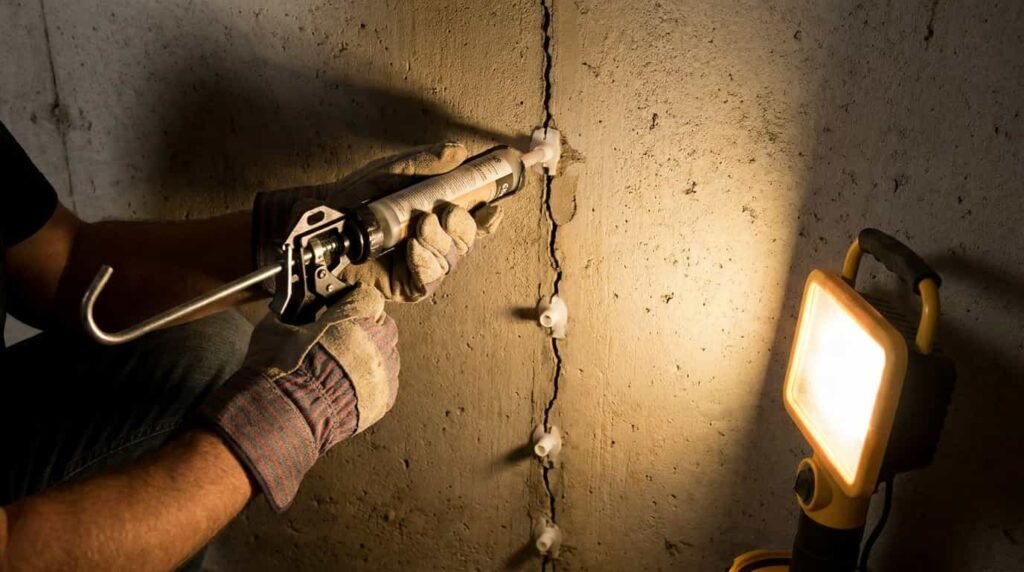
- Water pushing through the structure. Cracks, the joint where the wall meets the floor, or porous masonry.
Step 2 — Remove what is holding the smell
This is the step people skip, and it is the one that decides whether the smell comes back. Odour lives in porous material. You can clean every hard surface in the room perfectly and still have a musty basement because of three cardboard boxes in the corner.
Take out and assess: cardboard, paper, fabric, carpet and underlay, upholstered furniture, ceiling tiles, and any drywall that has been wet. Anything soft that has been damp for a long time and still smells after drying is usually not worth saving — it will re-scent the room every humid day.
If it is soft, it was wet, and it still smells after it dries, it is not storage any more. It is an air freshener running in reverse.
Step 3 — Clean what is left
For hard surfaces, detergent and water with a stiff brush does the work; the physical removal matters more than the product. Ventilate while you work, wear gloves and an N95 mask, and let surfaces dry completely afterwards — cleaning a surface and leaving it damp simply restarts the process.
The EPA sets a useful line for when this stops being a DIY job: if the mouldy area is larger than about 10 square feet — roughly a 3 ft by 3 ft patch — most people should bring in a professional. That is also the point at which getting a remediation quote is worth doing.
Step 4 — Get the air dry, and keep it dry
Mould needs moisture to establish, so the practical target is humidity low enough that it cannot. The EPA’s guidance is to keep indoor relative humidity between 30 and 50 percent.
- Buy a hygrometer before you buy anything else. They cost very little and without one you are guessing at the only number that matters here.
- Size the dehumidifier to the space and run it continuously at first, not in short bursts. Plumb the outlet to a drain if you can — a unit that stops when its tank fills is a unit that is off most of the time.
- Do not ventilate with warm humid outdoor air. In summer that adds moisture to a cold room, which is the opposite of what you want.
- Insulate cold pipes if they are sweating, and check the dryer is actually venting outside.
Step 5 — Only now, treat any smell that is left
If steps one to four are done and the room is holding 30–50% humidity, whatever smell remains is residual rather than active, and now the odour absorbers are worth using. Activated charcoal or a zeolite-based absorber, left in place and replaced periodically, will take the edge off while the structure finishes drying. Give it weeks rather than days.
If the smell is still strong a month after the room is dry, something was missed — almost always a porous item still in the room, or a second moisture source.
Three fixes you will see recommended that do not work
These come up in nearly every article on this topic, which is the only reason they are worth addressing.
Ozone generators
Widely sold for exactly this problem. The EPA’s position is blunt: at concentrations that do not exceed public health standards, ozone “does not effectively remove viruses, bacteria, mold, or other biological pollutants”, and it is “not effective at removing many odor-causing chemicals”. No federal agency has approved ozone generators for use in occupied spaces, and ozone at the levels these machines produce can damage the lungs. It is the rare case where the popular remedy is both ineffective and a health risk.
Air fresheners and scented plug-ins
These add a smell on top of a smell. The underlying odour is still being produced, and you have now lost the early-warning signal that told you the problem was still there.
Painting over it
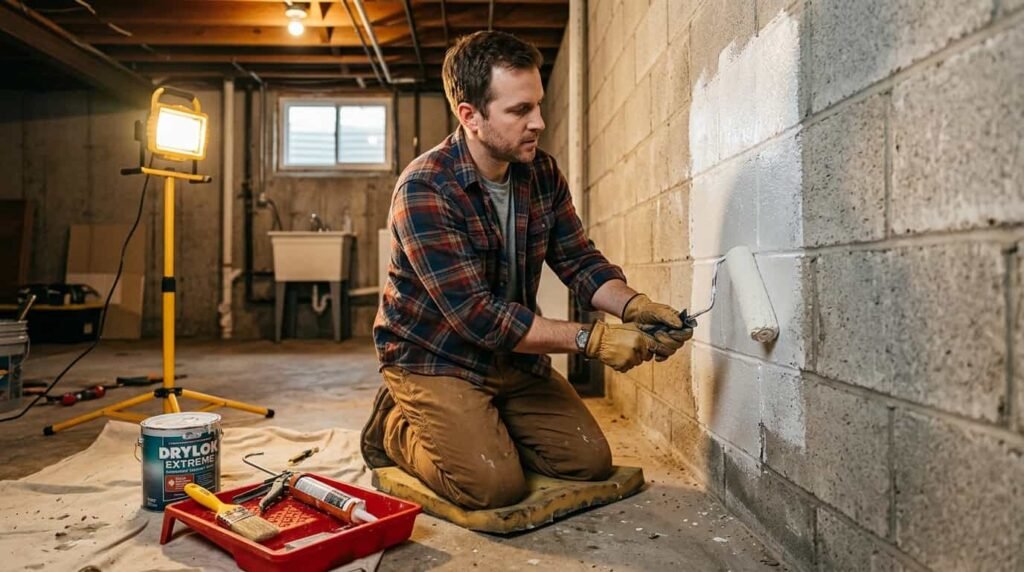
Sealing a damp wall with paint traps the moisture rather than removing it. It typically resurfaces within a season as peeling paint or efflorescence, and you will strip it all off again before you can do the job properly.
When it is not mould at all
If the smell is sharp rather than earthy, check these before spending money on damp work:
| Smell | Likely cause | What to do |
|---|---|---|
| Sewage or rotten egg | Dried-out floor drain trap, or a drainage fault | Pour a litre of water down any unused floor drain first — a dry trap is a five-minute fix. If it persists, call a plumber. |
| Sweet, solvent-like | Heating oil, or stored paints and solvents | Check the tank and lines, and move solvents to a ventilated store. |
| Rotting, with flies | A dead animal in a wall cavity or under the floor | Follow the flies and the intensity gradient; the source is usually within a metre. |
| Sharp, chemical, new since work was done | Off-gassing from new materials | Ventilate and give it time; this normally fades. |
Radon deserves a mention here because it comes up in basement discussions: it is a real risk and it is more common in basements, but it is odourless. If you can smell something, it is not radon — and if you are worried about radon, that needs a test kit, not your nose.
When to stop and call someone
- Mould covering more than about 10 square feet.
- Any sewage or flood water involvement.
- Mould you can smell but cannot find — it may be inside a wall or under flooring.
- The smell returns within weeks of a thorough job, which usually means an ongoing source you have not located.
- Anyone in the house has asthma, a respiratory condition, or is immunocompromised, and symptoms track with time spent in the basement.
One thing worth knowing before you make that call: nearly every company that will assess your basement for free also sells the solution. That does not make them wrong, but it does mean a second opinion is worth the price of the first one. Our questions to ask a specialist guide is written for exactly that conversation.
How long should this take?
| Stage | Realistic timeframe |
|---|---|
| Diagnosis (including the 24-hour plastic test) | 1–2 days |
| Fixing an external drainage or gutter cause | An afternoon |
| Removing porous items and cleaning | 1–2 days |
| Structure drying out enough for the smell to lift | 2–6 weeks |
| Confirming it has held | One full humid season |
FAQ
Will a dehumidifier alone get rid of the smell?
Sometimes — if the cause was purely humid air and nothing porous absorbed it. If the smell is coming from wet material or an active leak, a dehumidifier manages the symptom for as long as it runs and stops helping the day you switch it off.
Does bleach get rid of a musty smell?
On hard, non-porous surfaces it kills what it touches. On porous material — timber, plaster, masonry, fabric — the liquid soaks in but the growth extends deeper than the surface, so you disinfect the top layer and leave the rest. That is why the smell so often returns a week later, once the chlorine smell fades.
Why is it worse in summer?
Warm outside air holds far more moisture than cold air. When it reaches a cool basement it cools, cannot hold that moisture any more, and deposits it on every cold surface. This is also why opening the windows on a humid day makes it worse, and why the problem shows up mainly in summer.
Can I just seal the floor and walls?
Only after the moisture source is fixed and the structure is dry. Sealing a damp structure moves the problem rather than solving it, and usually surfaces somewhere less convenient.
Is the smell itself dangerous?
The odour is a warning sign rather than the hazard. What matters is what is producing it. Damp indoor environments are associated with respiratory symptoms and worsened asthma, which is why the health guidance below is worth reading if anyone in the house is affected — and why this is a problem to fix rather than mask.