
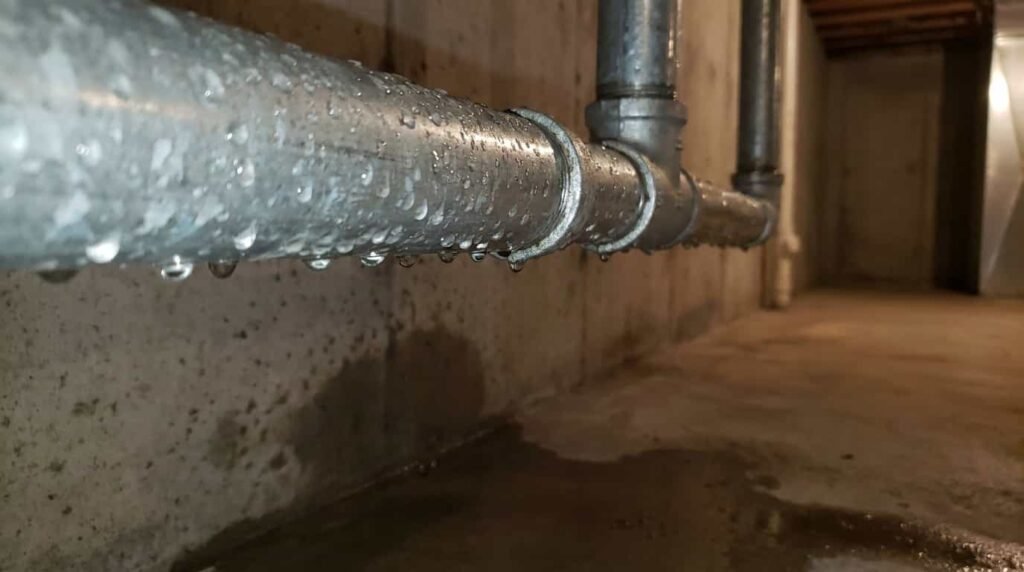
Why Do Basement Pipes Sweat? Causes and Fixes
A sweating pipe is not leaking. It is telling you the dew point in your basement is above the pipe temperature, and it is the one measurement you already have.
A sweating pipe is not leaking. It is telling you the dew point in your basement is above the pipe temperature, and it is the one measurement you already have.
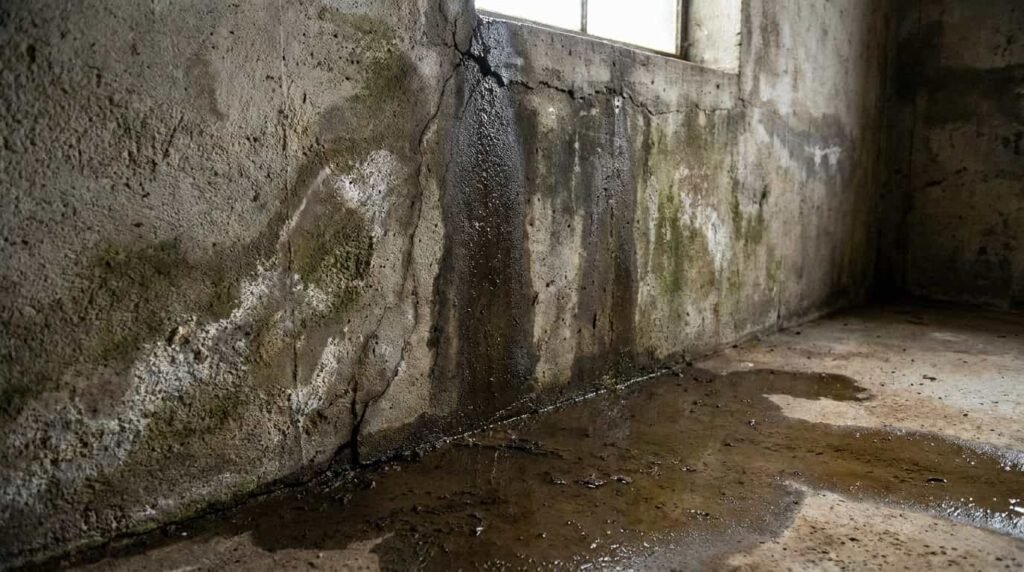
Why some storms wet the basement and others do not, how to trace the entry point, and why the cheapest fix is usually outside rather than in.
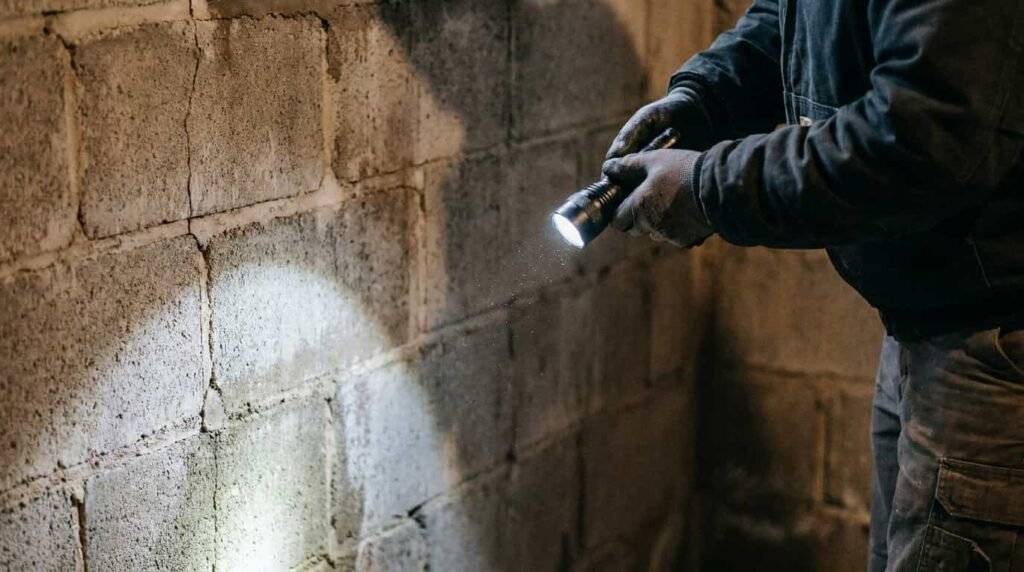
Five tests you can run yourself, each with a duration and a decision rule, in the order that rules out the cheapest causes first.
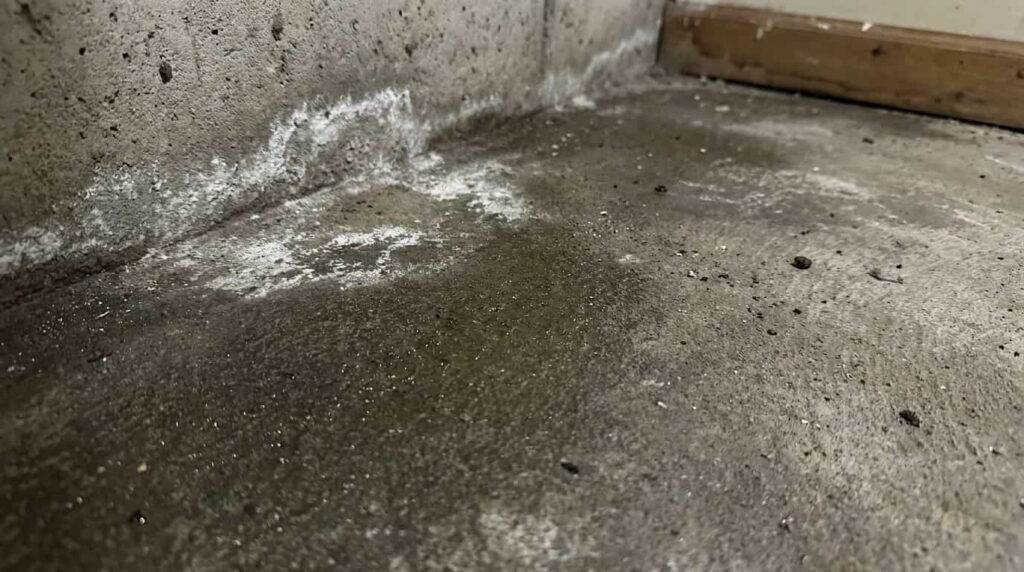
Bare concrete absorbs condensation as fast as it forms, so you never see it. Three mechanisms produce the same clammy floor and they need opposite fixes.
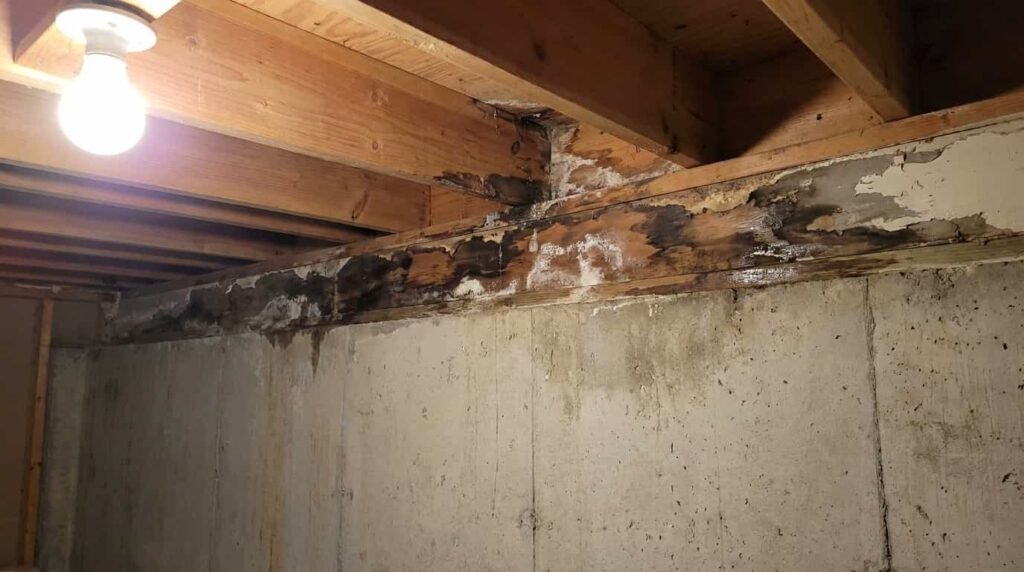
Damp where the floor structure meets the foundation has six common causes. Seasonality, rain and the back of the insulation tell you which one.
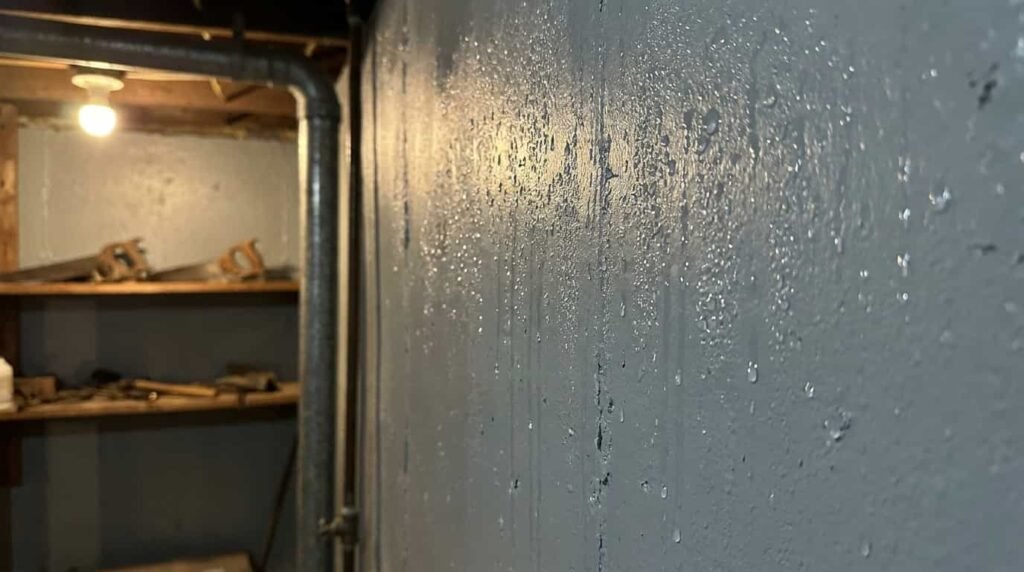
Summer damp is usually condensation, not a leak. Why opening the windows makes it worse, and the one number that tells you whether to open them at all.
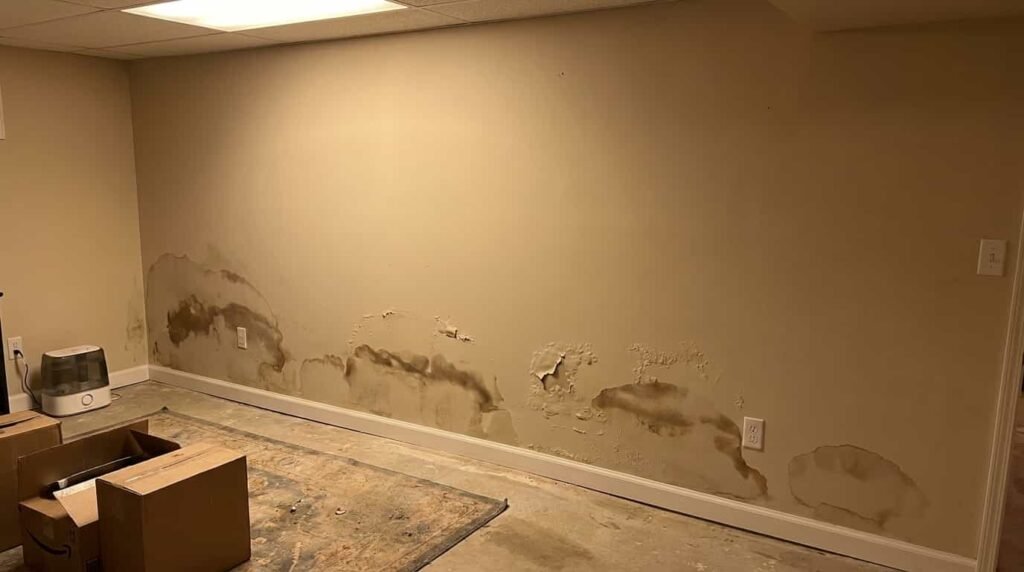
How to tell a plumbing leak from groundwater seepage behind a finished wall, what each detection tool actually measures, and the free tests to run first.
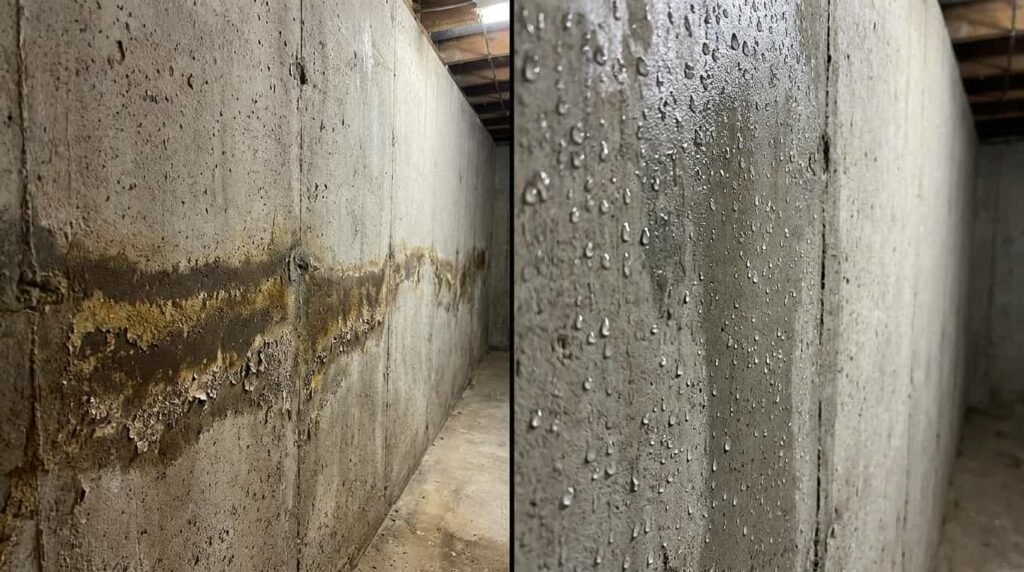
Two causes, opposite fixes. Three tests you can run yourself – a 24-hour sheet test, a dew point check, and a timing pattern – that settle which one you have.
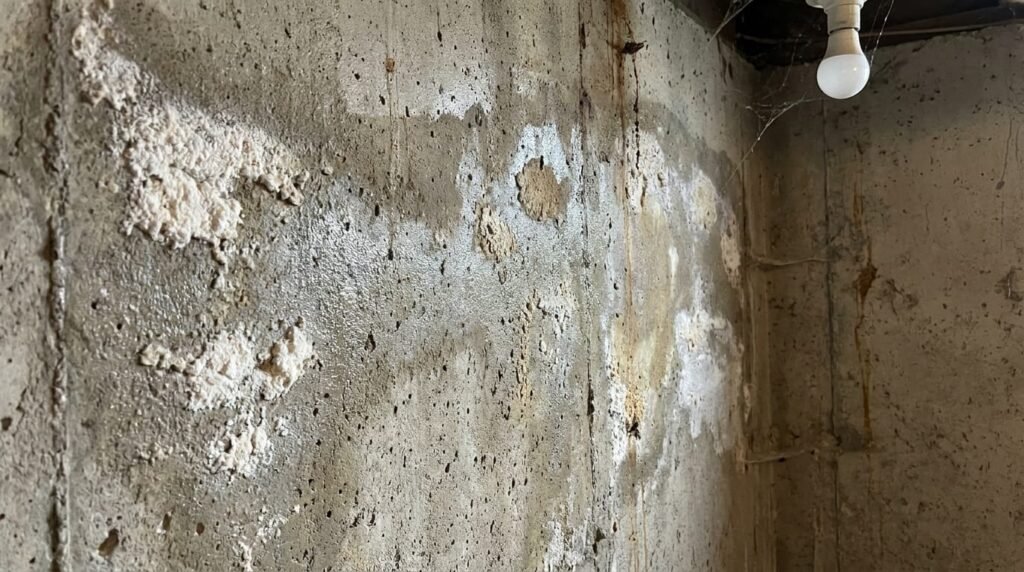
How to tell the white deposit on your basement wall from mould, which of the three white deposits you actually have, and what the pattern tells you about the moisture.
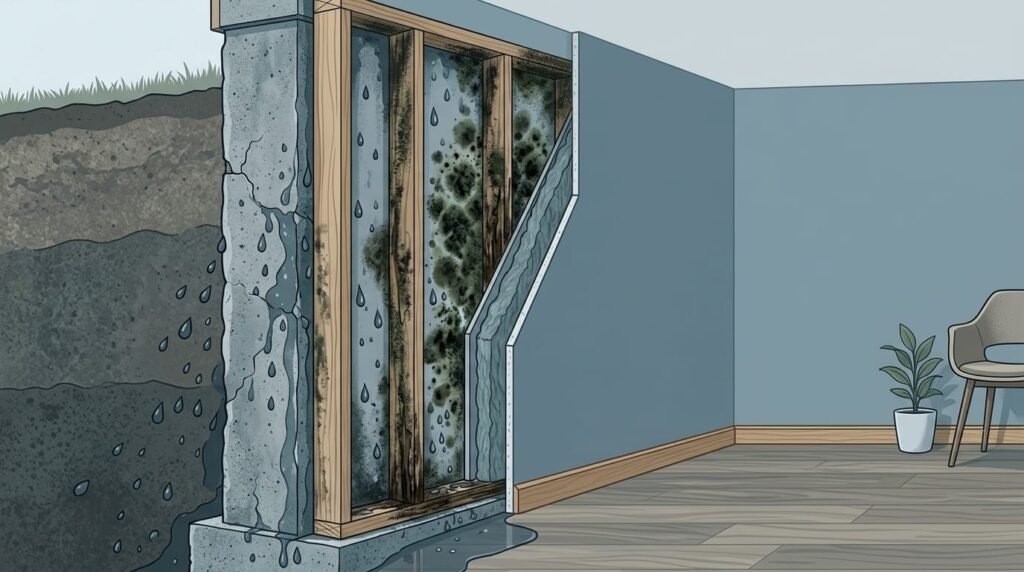
You cleaned it, it looks dry, and it still smells. Here is what you are actually smelling, why scrubbing did not stop it, and how to tell live growth from residue.